
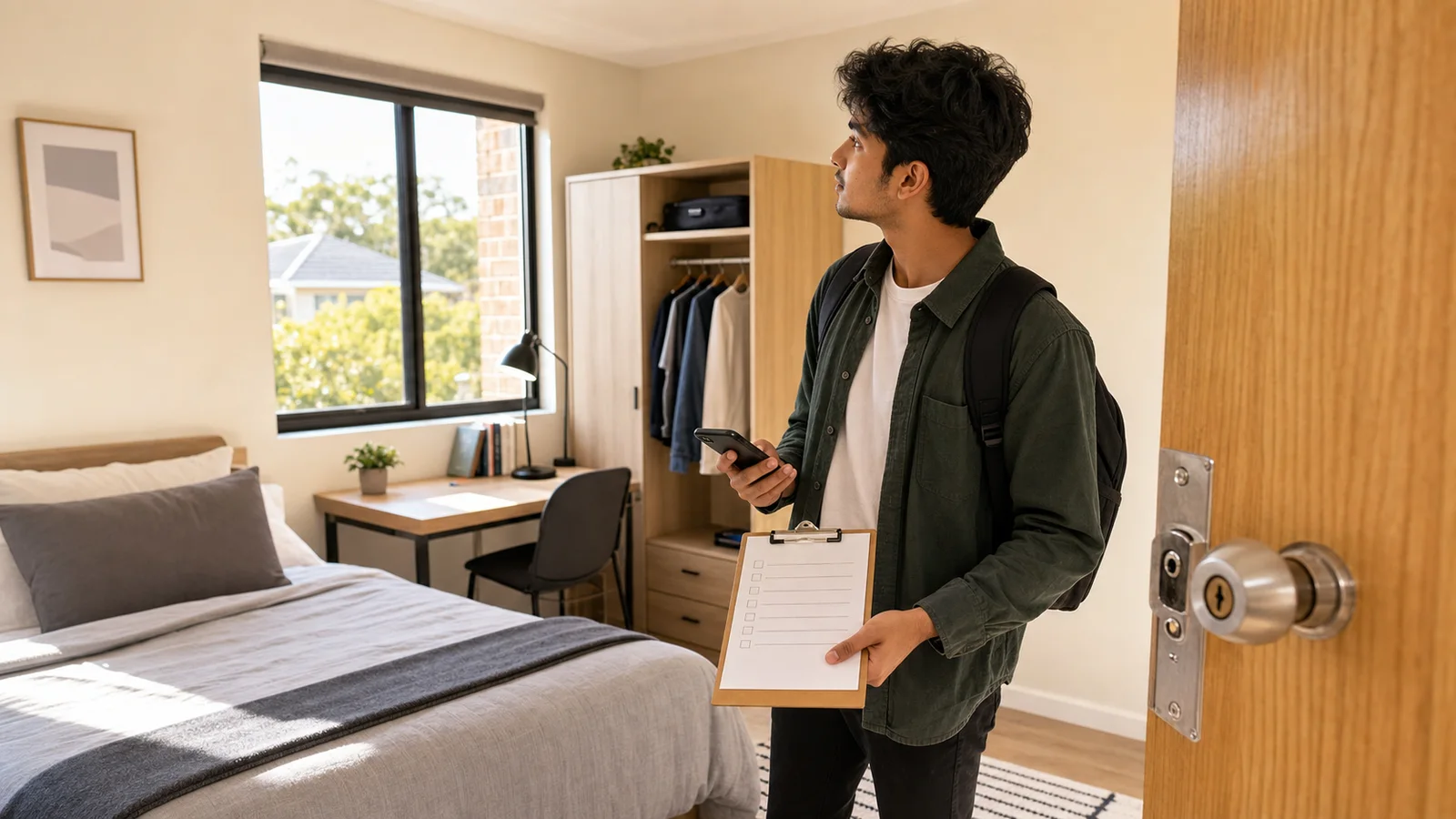
Inspecting a room is one of the most important steps before you agree to move in. Photos can look clean, rent can sound affordable, and the location can seem convenient, but you only understand the room properly when you check it carefully.
This guide is written for Nepali students, new migrants, and anyone looking for shared accommodation in Melbourne. Use it before an inspection, during the inspection, and before paying bond or rent.
Why inspection matters
A room is not just a bed. It is where you will sleep, study, rest, call family, prepare for work, and keep your belongings safe.
Many problems can be avoided if you check the room before saying yes. Common issues include:
- Mould or damp smell
- Poor heating or ventilation
- Broken locks
- Too many people sharing one bathroom
- Hidden bills
- Noise from roads, trains, or housemates
- Unclear house rules
- Pressure to pay quickly
- Rooms that look different from the photos
If possible, inspect in person. If you are not yet in Melbourne, ask for a live video inspection. Do not rely only on screenshots or old photos.
Before the inspection
Prepare before you go. A short checklist can help you avoid forgetting important questions.
Before the inspection, confirm:
- Full address or nearest major street
- Weekly rent
- Bond amount
- Whether bills are included
- Available move-in date
- Number of people in the house
- Room type: private, shared, furnished, or unfurnished
- Whether couples are accepted, if relevant
- Distance to train, tram, or bus
- Inspection time and contact person
Save the listing, photos, and messages. If details change later, you will have a record of what was promised.
If you are new to the area, try to inspect during daylight. If you work late shifts or study at night, also check what the street feels like after dark.
Check the location first
Before entering the house, look around the area.
Check:
- Is the street quiet or very noisy?
- Is there safe lighting at night?
- How far is the nearest train, tram, or bus stop?
- Is the walk to public transport comfortable?
- Are there grocery stores nearby?
- Is the house close to your university, college, or workplace?
- Is there parking, if you need it?
- Are bins and outdoor areas maintained?
A cheap room can become expensive if transport is difficult. Check the route to your campus and possible work locations before deciding.
You can use the Public Transport Victoria journey planner to compare travel time from the address.
Check locks and basic safety
Safety should be checked before comfort.
During the inspection, look at:
- Front door lock
- Bedroom door lock, if provided
- Window locks
- Bathroom and toilet privacy
- Smoke alarms
- Hallway lighting
- Entry path and stairs
- Electrical power points
- Exposed wires or damaged switches
- Safe access to the laundry or backyard
Ask who has keys to the house and room. In a shared house, it is important to know whether past renters still have keys or whether locks were changed.
If the room is in a rooming house, rooming house minimum standards may apply. Consumer Affairs Victoria has information about rooming house minimum standards.
Look for mould, damp, and ventilation problems
Mould can affect comfort, health, smell, clothing, books, and electronics. Do not ignore it.
Check:
- Corners of the room
- Ceiling edges
- Around windows
- Behind curtains
- Wardrobes
- Bathroom ceiling
- Under sinks
- Laundry area
- Any damp smell when you enter
Ask whether the room gets sunlight and whether windows open properly. A room with no fresh air can become uncomfortable in winter and summer.
Small marks may be manageable, but strong mould smell, wet walls, or black patches are warning signs. If the person showing the room says "just clean it later", be careful.
Consumer Affairs Victoria explains rental property minimum standards, including mould and damp, on its minimum standards page.
Check heating and cooling
Melbourne weather can change quickly. A room may feel fine during inspection but become very cold in winter or hot in summer.
Ask:
- Is there heating in the room or main living area?
- Is the heater fixed, portable, electric, gas, or split system?
- Is cooling available in summer?
- Are there rules about using heaters or air conditioners?
- Are electricity or gas bills included?
- Is there a cost limit for heater use?
Also check:
- Curtains or blinds
- Window gaps
- Drafts under doors
- Sunlight direction
- Whether the room gets too hot in afternoon sun
If bills are included but heater use is restricted, ask for the rule before moving in.
Inspect the actual room carefully
Do not only stand at the door. Walk around and check whether the room suits your daily life.
Check:
- Room size
- Bed condition, if provided
- Mattress cleanliness
- Desk and chair, if provided
- Wardrobe or storage
- Natural light
- Curtains or blinds
- Power points
- Internet signal
- Mobile phone signal
- Noise from inside and outside
- Privacy from neighbours or street
- Door closing properly
- Carpet smell or floor condition
Imagine your normal routine. Can you study there? Can you sleep after work? Is there enough space for clothes, books, luggage, and personal items?
Check kitchen access
Kitchen problems are common in shared houses. A nice bedroom is not enough if the kitchen is crowded or uncomfortable.
Ask:
- How many people use the kitchen?
- Is there enough fridge space?
- Is there separate pantry space?
- Are cooking times restricted?
- Is vegetarian or non-vegetarian cooking allowed?
- Are strong cooking smells an issue?
- Is there a cleaning roster?
- Who buys shared items like dishwashing liquid?
- Are pots, pans, plates, and utensils shared?
Check:
- Stove condition
- Oven, if available
- Sink and hot water
- Fridge cleanliness
- Food storage
- Rubbish and recycling setup
- Exhaust fan or window ventilation
For many Nepali students, regular cooking is important for saving money. Make sure the house rules support your cooking routine.
Check bathroom and laundry
Bathrooms can look fine in photos but become difficult if too many people share them.
Ask:
- How many people share the bathroom?
- Is there one bathroom or more?
- Is the toilet separate from the shower?
- Is hot water reliable?
- Are there bathroom cleaning rules?
- Are there laundry days or time limits?
- Is laundry included or coin-operated?
- Is there space to dry clothes?
Check:
- Shower pressure
- Drainage
- Mould around tiles
- Toilet condition
- Bathroom fan or window
- Lock on bathroom door
- Washing machine condition
- Clothesline or dryer access
If six or seven people share one bathroom, think carefully about morning routines, work schedules, and university timing.
Count the number of people in the house
Always ask how many people live in the property. Do not only ask how many bedrooms there are.
Ask:
- How many people live here now?
- How many people will live here after I move in?
- Are any rooms shared by two people?
- Are couples living in the house?
- Does the owner live at the property?
- Are guests common?
- Are there children or family members living there?
More people usually means more noise, more bathroom use, more kitchen pressure, and higher bills if bills are split.
This does not mean a busy house is always bad. Some students prefer a lively house. The important thing is to know the real situation before agreeing.
Listen for noise
Noise can make studying and sleeping difficult.
During inspection, listen for:
- Road traffic
- Trains or trams
- Aircraft noise
- Neighbours
- Dogs
- Thin walls
- Loud housemates
- Kitchen or bathroom noise near the bedroom
- Garage or driveway noise
Ask about quiet hours and work schedules. If housemates work night shifts, sleep during the day, or cook late at night, make sure that suits you.
If possible, visit near the time you would normally be home. A house can feel different at 2 pm and 10 pm.
Understand house rules
Every shared house has rules. Problems happen when rules are not discussed before move-in.
Ask about:
- Guests
- Overnight visitors
- Cleaning roster
- Cooking times
- Food storage
- Noise at night
- Smoking
- Alcohol
- Parking
- Laundry
- Sharing household items
- Minimum stay
- Notice period before moving out
If rules are very strict, decide whether you can live comfortably with them. If there are no rules at all, that can also become a problem.
Check rent, bond, and bills
Before saying yes, understand the total cost.
Ask:
- What is the weekly rent?
- Is rent paid weekly, fortnightly, or monthly?
- How much bond is required?
- Are electricity, gas, water, and internet included?
- If bills are not included, how are they split?
- Will you receive copies of bills?
- Is there a written agreement?
- Will you receive receipts?
- What payment method is accepted?
- Is there any extra cost for heating, cooling, parking, or furniture?
Do not accept vague answers like "bills are normal" or "we will see later". Ask for clear details.
Consumer Affairs Victoria explains rules about bond amounts and payments, including that bond and rent are separate payments.
Ask for written proof
Before paying money, ask for written terms.
Your written agreement or message confirmation should include:
- Your name
- Room owner or head tenant name
- Property address
- Room details
- Weekly rent
- Bond amount
- Bills included or excluded
- Move-in date
- Notice period
- Minimum stay, if any
- House rules
- Payment method
Written proof does not need to be complicated. A clear signed agreement, email, or message record is better than a verbal promise.
Red flags during inspection
Be careful if:
- You are not allowed to inspect before paying
- The room looks different from the photos
- The person refuses a live video call
- The rent is much cheaper than similar rooms nearby
- The person avoids giving the full address
- You are pressured to pay immediately
- They ask for bond without written proof
- They refuse to provide receipts
- There is strong mould smell
- Locks are broken
- Too many people are living in the house
- Bills are not explained clearly
- Housemates seem uncomfortable or avoid questions
- The owner says "do not worry" to every serious question
Trust your judgement. It is better to miss one room than move into an unsafe or stressful situation.
If you are inspecting by video call
If you are still in Nepal or interstate, ask for a live video inspection. A real-time call is safer than only receiving photos.
Ask the person to show:
- Front of the property, if safe to share
- Street or nearby landmark
- Bedroom from all corners
- Windows and locks
- Wardrobe
- Bathroom
- Kitchen
- Laundry
- Common areas
- Heating or cooling
- Current date on the phone screen or a live action, if you are unsure
Ask questions during the call. If they only send short clips and refuse to answer, be careful.
Take photos and notes
After inspection, write down what you saw. If you inspect many rooms, details can become confusing.
Record:
- Address
- Rent
- Bond
- Bills
- Number of housemates
- Bathroom sharing
- Transport time
- Room condition
- Good points
- Concerns
- Any promises made
If you decide to move in, take photos of the room before unpacking. This can help later if there is a bond or damage dispute.
Consumer Affairs Victoria explains how condition reports can be used to record the condition of a rental property or room.
Quick checklist before you say yes
Before accepting the room, make sure:
- I inspected the room in person or by live video
- I know the full address
- I checked locks, windows, and basic safety
- I checked for mould and damp smell
- I understand heating and cooling
- I know how many people live there
- I know how many people share the bathroom
- I checked kitchen and laundry access
- I understand house rules
- I checked transport to university and work
- I know the total weekly cost
- I know whether bills are included
- I know the bond amount
- I will get written proof before paying
- I am not being pressured to pay quickly
- I feel comfortable with the housemates or owner
If you cannot tick most of these, take more time before deciding.
How HamroRooms can help
HamroRooms helps Nepali students and newcomers compare room listings in Melbourne more clearly.
With HamroRooms, you can:
- Browse rooms by suburb
- View room details before contacting owners
- Compare rent and availability
- Ask questions privately
- Look for rooms suitable for students and newcomers
- Avoid relying only on scattered social media posts
Even when using HamroRooms, you should still inspect the room, ask questions, and get payment terms in writing.
Final advice
Do not rush an inspection. A good room should be safe, clean, affordable, and suitable for your lifestyle.
Check the room, the people, the money, the transport, and the rules. If something feels unclear, ask. If the answer still feels wrong, walk away.
The right room should help you settle into Melbourne, not create stress from the first week.