
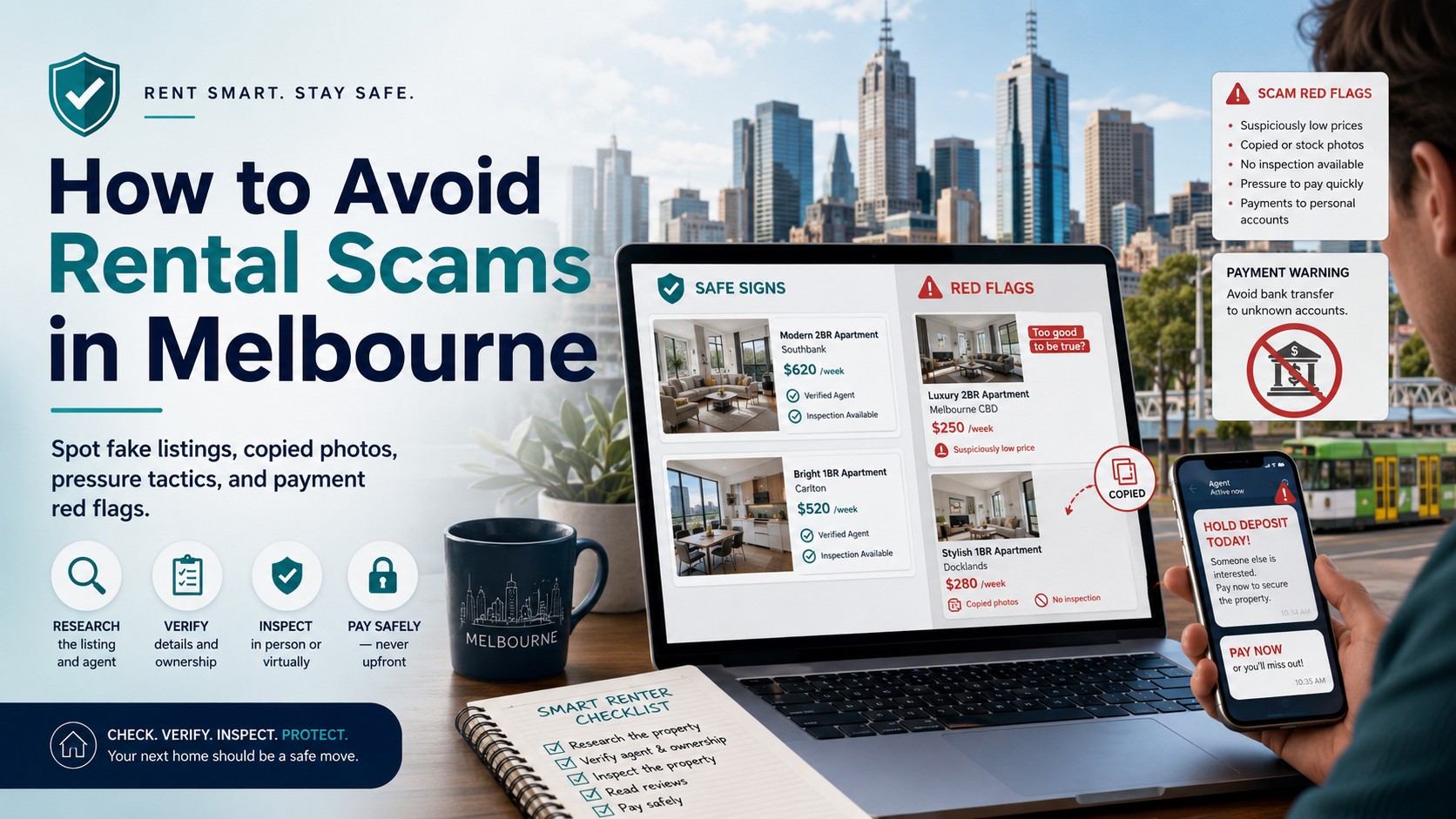
Finding a rental in Melbourne can feel stressful, especially when good properties disappear quickly. Scammers know this. They target renters who are under pressure, new to the city, unfamiliar with Victorian rental rules, or worried they will miss out if they do not act fast.
Rental scams can appear on property websites, Facebook Marketplace, community groups, Gumtree-style classifieds, WhatsApp groups, and even through fake emails that look like they come from real agents. Some scams are obvious. Others use real property addresses, copied photos, stolen IDs, fake lease documents, and professional-looking emails.
This guide explains how to spot a rental scam before you pay, what suspicious messages look like, how to check a listing, and what to do if you have already sent money or personal documents.
Common rental scams in Melbourne
Most rental scams follow a similar pattern: the scammer advertises a property they do not own or cannot legally rent out, then pressures you to send money or identity documents before you can properly inspect or verify the home.
Common examples include:
A fake landlord advertising a real Melbourne property using copied photos. A scammer pretending to be overseas and unable to show the property in person. A fake agent asking for bond or first month’s rent before an inspection. A “too good to be true” room in the CBD, Carlton, Southbank, Docklands, Richmond, Brunswick, St Kilda, or near a university. A copied listing from a real estate website with a lower price on Facebook Marketplace. A fake share house listing where the “current tenant” asks for a holding deposit. A scammer asking for passport, licence, bank details, or student ID before you have confirmed the listing is real.
The biggest warning sign is simple: someone asks you to pay money before you have inspected the property and confirmed who you are dealing with.
Red flags in fake rental listings
A listing may be suspicious if it has one or more of these warning signs.
- The rent is much cheaper than similar properties
Be careful if a property is advertised far below the normal market price for the suburb.
For example:
A modern one-bedroom apartment in Melbourne CBD for a price that seems unusually low. A private room near Monash, RMIT, Melbourne Uni, or Swinburne at a price far cheaper than other rooms. A fully furnished apartment with bills included, parking included, and no inspection required.
Scammers often use a low price to make renters act quickly.
- The photos look too polished or familiar
Fake listings often use copied photos from:
Realestate.com.au Domain Airbnb old rental listings hotel or serviced apartment websites display homes interstate or overseas properties
A listing is suspicious if the photos look professional but the ad is posted by a private person with limited details.
- The address is missing or vague
Be cautious if the listing says things like:
“near Melbourne Central” “close to Monash University” “CBD apartment” “near tram stop” “address shared after deposit” “inspection only after application”
A genuine rental listing should usually provide enough location detail for you to verify the property.
- The same listing appears in multiple places with different details
Search the address, key phrases, and images. If you find the same property advertised elsewhere with a different rent, different landlord, or different agency, stop and verify before continuing.
- The advertiser avoids normal rental processes
A scammer may say:
“No need for formal application.” “I trust you, so we can do this privately.” “Just send the bond and I will reserve it.” “You can move in today after payment.” “I am not using an agent because they charge too much.” “The keys will be mailed after deposit.”
These are major warning signs.
Suspicious messages renters should watch for
Scammers often use emotional, urgent, or overly formal messages. Below are examples of messages that should make you pause.
Example 1: The overseas landlord
Hi, I am currently overseas for work and cannot show the apartment personally. The apartment is fully furnished and available now. Many people are interested, so you need to pay the bond first to secure it. After payment, I will send the keys by courier.
Why this is suspicious: They cannot show the property, want money upfront, and promise keys after payment.
Example 2: The fake holding deposit
You are approved. To remove the listing from the market, please send $800 today. This is refundable if you do not like the property.
Why this is suspicious: They are asking for money before you have safely verified the property, the owner, or the rental process.
Example 3: The copied-agent email
Congratulations, your application has been accepted. Please transfer the bond and first month rent to the account below within 2 hours or the property will be offered to another applicant.
Why this is suspicious: Scammers may impersonate real agencies. Always call the agency using the phone number on its official website, not the number in the email.
Example 4: The personal document grab
Before inspection, please send your passport, driver licence, bank statement, payslips, and Medicare card so we can confirm your identity.
Why this is suspicious: Rental applications do require identity checks, but scammers collect documents for identity theft. Do not send sensitive documents until you have verified the agent, agency, listing, and application platform.
Example 5: The pressure tactic
There are 15 people waiting. If you do not pay now, I will give it to someone else. I am trying to help you, but you must act immediately.
Why this is suspicious: Urgency is one of the most common scam tactics. A genuine rental process should allow you time to verify details.
Payment warning signs
Be very careful if someone asks you to pay by:
bank transfer to a personal account cryptocurrency gift cards PayID to an individual you cannot verify Western Union or money transfer service international transfer payment link sent by text or WhatsApp cash deposit “friends and family” payment method a different account name from the rental provider or agency
A legitimate rental payment should be traceable and connected to the correct rental provider, agency, or official rental process.
Before paying anything, ask yourself:
Have I inspected the property in person or through a verified live inspection? Have I confirmed the agent is real and licensed? Have I confirmed the agency’s details from its official website? Does the bank account name match the rental provider or agency? Do I have a written rental agreement? Is the bond being handled through the correct Victorian rental bond process? Am I being rushed?
If the answer to any of these is “no”, do not pay yet.
How scammers use copied photos
Copied photos are one of the easiest ways scammers create fake listings. They may take photos from a real rental listing and post them somewhere else with a cheaper price.
To check photos:
Right-click the image and search it with Google Lens or another reverse image search tool. Search the property address online. Look for the same images on real estate websites. Compare the rent, agency, suburb, and availability date. Check whether the same photos appear in another city or country.
Be careful with listings where the images look like an Airbnb, hotel, or display apartment but the rent is unusually cheap.
How to verify a rental listing in Melbourne
Before sending money or documents, take these steps.
- Inspect the property
Where possible, inspect the property in person. If you cannot attend, ask someone you trust in Melbourne to inspect for you.
For remote inspections, be careful. A scammer can send old videos or stolen walkthroughs. A safer remote inspection should be live, specific, and verifiable. For example, you can ask the agent to show today’s date on their phone, show the street view from the window, or answer specific questions about the property in real time.
- Check the agent or agency
If the person says they are a real estate agent:
Search the agency name online. Call the agency using the phone number on its official website. Ask whether the person works there. Ask whether the property is actually available. Confirm the correct payment process.
Do not rely only on phone numbers, email signatures, or links sent by the person messaging you.
- Search the address
Search the full address online. Look for:
current listings old listings sale history agency pages Airbnb or short-stay listings different rent amounts different contact names
If the listing exists elsewhere with different details, verify directly with the official agency.
- Check the wording of the ad
Scam listings often use vague, generic, or awkward wording. Examples include:
“beautiful apartment located in heart of city” “owner is travelling so fast payment needed” “kindly make deposit” “100% refundable after viewing” “no time wasters” “first to pay gets room” “God fearing landlord” “I only need honest tenant”
Awkward wording alone does not prove a scam, but it is a warning sign when combined with pressure or payment requests.
- Be careful with private rentals and share houses
Private rentals and share houses can be legitimate, but they require extra care.
For share houses:
Meet the current occupants. Inspect the room and common areas. Confirm who is on the lease. Ask whether the rental provider has approved the room arrangement. Do not pay a bond to a stranger without written proof. Be careful if the person refuses a video call or inspection. Identity document safety
Scammers may ask for personal documents before you have verified the property. These documents can be used for identity theft.
Be careful with:
passport driver licence Medicare card student ID bank statement payslips visa documents birth certificate tax file number utility bills credit card details
Before uploading documents, confirm that you are using the real agency’s official application system.
You can also reduce risk by:
watermarking documents with the purpose, such as “For rental application at [address] only” hiding unnecessary numbers where appropriate avoiding sending documents through social media messages not sending more documents than required asking why each document is needed
Never send your tax file number for a rental application.
Pressure tactics scammers use
Scammers rely on stress. They want you to feel that you must act immediately.
Common pressure tactics include:
“There are many applicants.” “You must pay in the next hour.” “I will give it to someone else.” “The bond is refundable, so there is no risk.” “I cannot show the property until you pay.” “I am overseas, but I can send keys.” “The agent is busy, so pay me directly.” “Do not contact the agency; they will charge more.” “I am helping you skip the queue.”
A genuine rental opportunity should not require panic. If someone is rushing you, slow down.
What not to do
Avoid these mistakes:
Do not pay bond before inspecting or verifying the property. Do not send money to a personal account without checking who owns it. Do not trust screenshots of passports, licences, or title documents. Do not click payment links from unknown senders. Do not send identity documents through Facebook, WhatsApp, or SMS. Do not rely only on a video or photo as proof. Do not assume a real address means a real listing. Do not continue if the person becomes angry, pushy, or evasive.
Scammers often become defensive when asked for verification. That is another warning sign.
What to do if you think a listing is fake
If you suspect a scam but have not paid:
Stop communicating with the person. Do not send money or documents. Screenshot the listing and messages. Report the listing to the platform. Search for the real agency or owner if the property appears copied. Warn others if it was posted in a community group. Report the scam to Scamwatch.
If the scammer has your documents, treat it as an identity theft risk even if you did not pay money.
What to do if you have already paid
If you have already sent money, act quickly.
- Contact your bank immediately
Tell your bank you believe you have paid a scammer. Ask whether they can stop, reverse, recall, or trace the payment.
Speed matters. The sooner you contact your bank, the better your chance of limiting the damage.
- Save all evidence
Keep:
screenshots of the listing the URL of the listing emails text messages WhatsApp or Messenger chats bank account details payment receipts names, phone numbers, and email addresses used any lease documents sent to you identity documents you provided the date and time of each payment
Do not delete the conversation, even if you feel embarrassed. The evidence may help your bank, the platform, or authorities.
- Report the scam
You can report the scam to:
Scamwatch ReportCyber the platform where the listing appeared Victoria Police through the appropriate reporting pathway if required Consumer Affairs Victoria if someone is pretending to be a Victorian rental provider, agent, or business
If you are in immediate danger, call Triple Zero on 000.
- Protect your identity
If you sent identity documents, consider taking extra steps:
Contact your bank and tell them your identity documents may be compromised. Change passwords on your email and important accounts. Turn on multi-factor authentication. Watch for unusual bank activity or credit enquiries. Contact IDCARE for identity theft support. Replace compromised identity documents if needed. 5. Warn the platform and other renters
Report the fake listing so it can be removed. If it was in a Facebook group or community chat, notify the admins.
This helps prevent other renters from losing money.
A simple rental scam checklist
Before paying bond, rent, or a holding deposit, check the following:
I have inspected the property or arranged a trusted person to inspect it. I have verified the agent or rental provider independently. I contacted the agency using details from its official website. The listing price is realistic for the suburb. The photos do not appear copied from another listing. The person is not rushing me to pay. I have a written rental agreement. I understand where the bond is going. I am not paying by crypto, gift card, wire transfer, or suspicious payment method. I have not sent unnecessary personal documents. I feel comfortable walking away if something seems wrong.
If you cannot tick these boxes, pause before paying.
Extra tips for international students and new arrivals
Rental scammers often target people moving to Melbourne from overseas or interstate because they may not be able to inspect in person.
If you are not yet in Melbourne:
Ask your university, employer, or a trusted local contact for housing support. Use reputable rental platforms and verified agencies. Avoid paying for a property you cannot inspect. Be careful with Facebook groups offering “urgent rooms”. Book short-term accommodation first if needed, then inspect long-term rentals after arrival. Ask for a live video inspection, but do not treat that alone as proof. Never send passport or visa documents to an unverified private advertiser.
It is better to spend a little more time checking than to lose your bond, rent, and identity documents.
Final thoughts
Rental scams in Melbourne work because the market can be competitive and renters often feel pressure to move quickly. The best protection is to slow the process down.
Scammers want urgency, secrecy, and upfront payment. Genuine rental providers and agents should be willing to verify who they are, show the property properly, explain the payment process, and provide correct documentation.
If something feels wrong, pause. Search the address, check the photos, call the agency directly, and never pay for a property you cannot verify.
A real rental opportunity will survive basic checks. A scam usually will not.